The International Date Line: Why Does Travel Cross Dates?
When crossing the Pacific, the calendar may jump forward or back by a day. Learn about this imaginary date boundary.
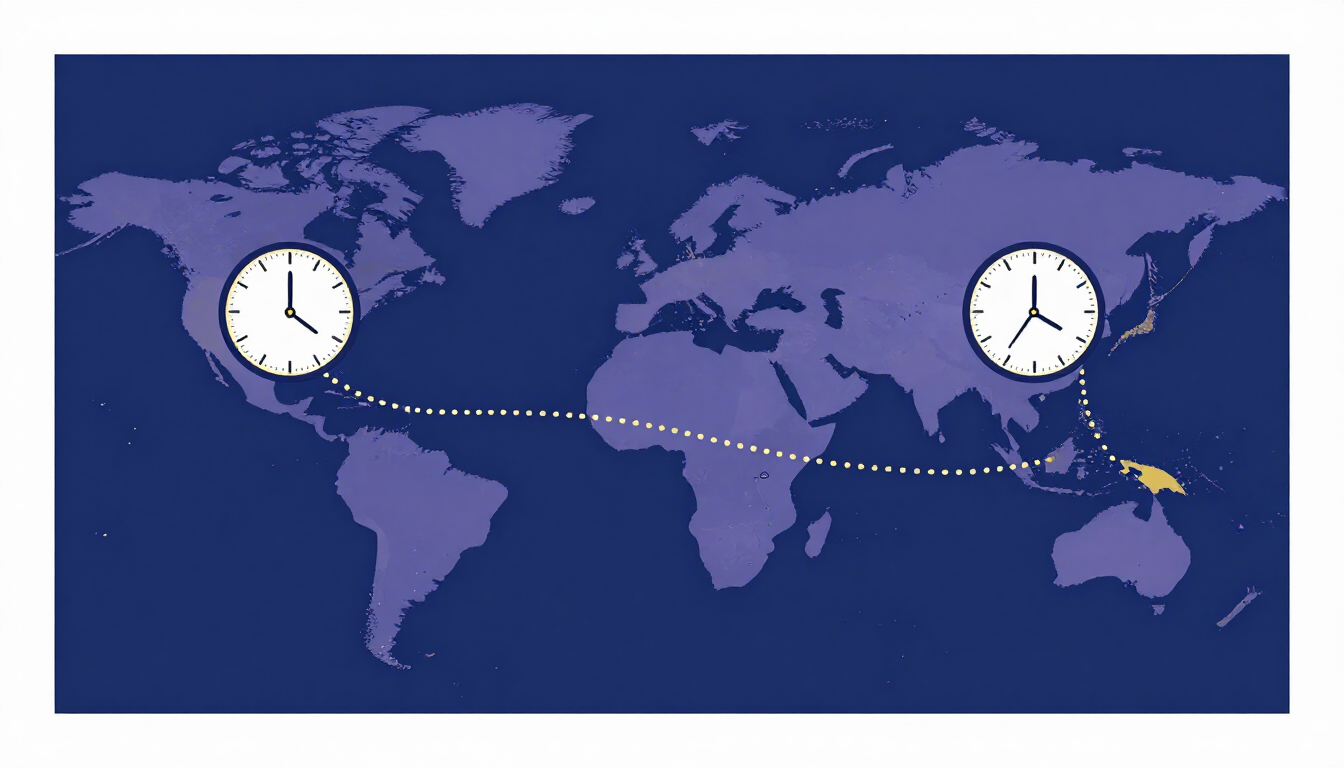
A Line That Helps Distinguish Dates
The International Date Line roughly follows the 180° meridian across the Pacific Ocean, but it detours around certain countries and islands so that local communities use a consistent date.
Usually, when crossing westward, the calendar date advances by one day; when crossing eastward, the date goes back one day. This does not mean time flows backward—only that the date label changes.
Tips for Travel and Meetings
A trans-Pacific flight may appear to arrive earlier than it departs on the calendar, or skip a day during the trip. Rely on the local date and time shown on the flight itinerary.
When scheduling trans-Pacific meetings, write out the day of the week and date for each city to avoid “tomorrow” meaning different things to different participants.
Put it into practice
Ready to check world time?
Pick cities and a date to easily compare times across time zones.
Open the time zone converter